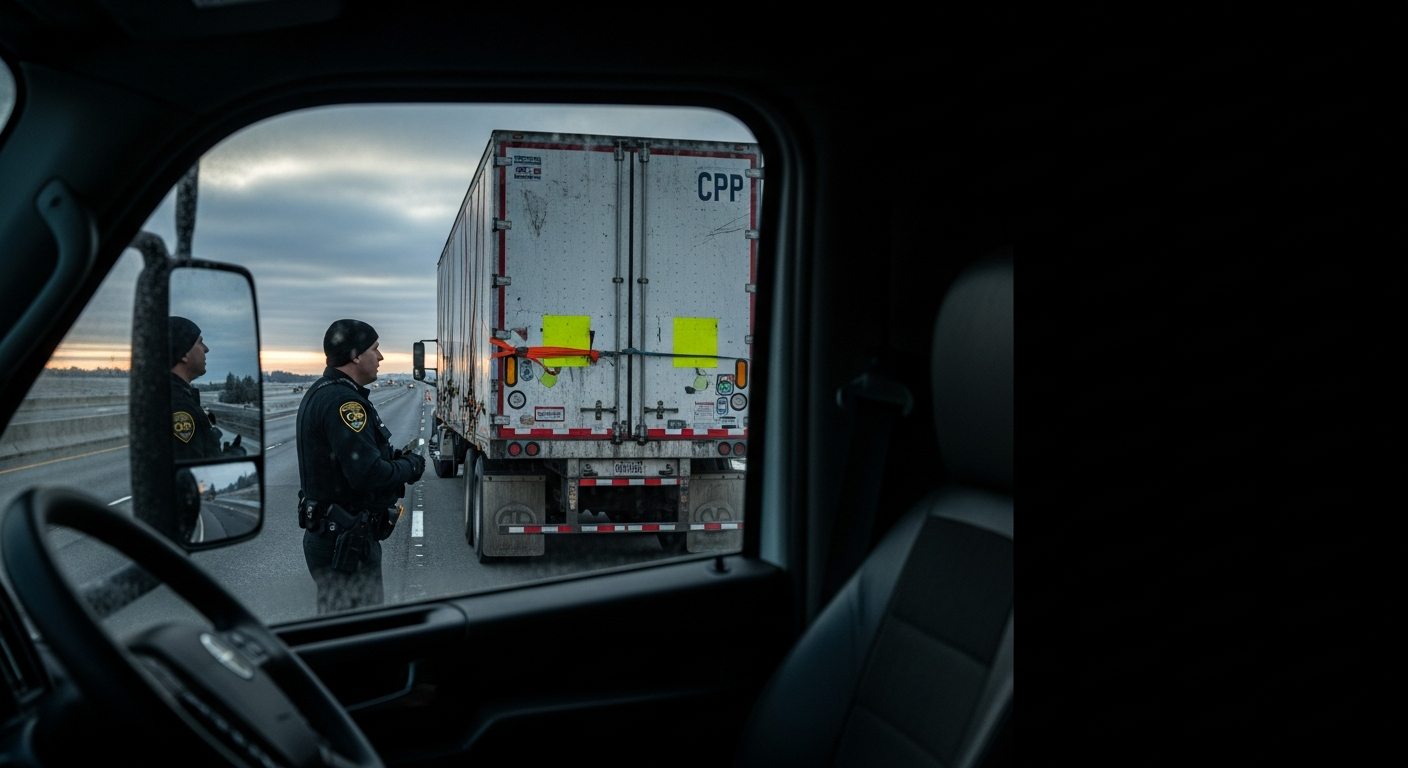
CHP Stops Unlicensed Driver Hauling Unsafe Load: What CDL Drivers Need to Know
On May 24, 2026, the California Highway Patrol (CHP) pulled over an unlicensed pickup truck driver in Hayward for hauling an "unsafe load." The incident, reported by CDLLife, highlights ongoing enforcement of load securement and licensing requirements—issues that directly affect professional CDL drivers and fleet carriers.
While the driver in this case was operating a pickup truck, the same principles apply to commercial vehicles. Improperly secured loads can lead to fines, out-of-service orders, and even accidents. For CDL drivers, understanding these regulations is critical to protecting your career and your safety.
The Incident: What Happened?
According to the CHP, the driver was hauling a load that was not properly secured, posing a risk to other motorists. Additionally, the driver did not possess a valid commercial driver's license (CDL) required for certain heavy loads. The CHP impounded the vehicle and issued citations.
This case serves as a reminder that load securement rules apply to all vehicles on the road, not just big rigs. The FMCSA's cargo securement standards (49 CFR Part 393) require that all cargo be properly tied down to prevent shifting, leaking, or falling.
Why This Matters for CDL Drivers
Even if you're driving a pickup truck for personal use, if you're hauling commercial loads, you need a CDL and proper securement. For professional drivers, violations can lead to:
- Fines: Up to $15,000 per violation for serious securement issues.
- Out-of-service orders: Your truck stays parked until the load is fixed.
- Safety scores: Violations affect your CSA score, which can hurt job prospects.
- Insurance costs: Carriers with poor safety records pay higher premiums.
As we discussed in our earlier post on truck crash rates are down but insurance costs keep rising, even a single violation can trigger rate hikes.
Load Securement Best Practices
To avoid becoming the next CHP headline, follow these guidelines:
- Know your weight limits: Overloading is a common violation. Check your GVWR and axle limits.
- Use proper tie-downs: Chains, straps, and binders must be rated for the load weight.
- Inspect regularly: Check securement at every stop. Vibration can loosen straps.
- Stay licensed: Ensure your CDL is current and matches the vehicle class.
For more on regulatory changes, see our article on states moving to slam brakes on self-driving trucks.
The Cost of Non-Compliance
A single unsafe load violation can cost thousands in fines and lost time. For carriers, it can mean higher insurance premiums and lost contracts. On our platform, we've seen that drivers with clean safety records get matched 24 hours faster on average. With 4,342+ drivers and 530,329+ carriers indexed, maintaining a spotless record is key to getting hired quickly.
How LMDR Helps Drivers Stay Compliant
At Last Mile Driver Recruiting, we prioritize safety. Our platform connects CDL drivers with carriers that value compliance. Whether you're an owner-operator or company driver, we help you find jobs that respect your skills and safety record.
If you're a driver looking for your next opportunity, apply for a CDL job today. Carriers, see our carrier pricing to access our driver network.
FAQ
Q: Do I need a CDL to haul a heavy load in a pickup truck?
A: Yes, if the vehicle's GVWR exceeds 26,001 lbs or you're hauling hazardous materials. Even if the truck is under that weight, commercial use may require a CDL.
Q: What are the penalties for an unsafe load violation?
A: Fines can range from $1,000 to $15,000 per violation, plus out-of-service orders and potential legal liability if an accident occurs.
Q: How can I check my load securement before hitting the road?
A: Perform a pre-trip inspection using FMCSA guidelines. Check that all tie-downs are tight, cargo is stable, and no items are protruding beyond the vehicle's dimensions.
FAQ
Frequently Asked Questions
Free · AI-Powered
Find your best carrier match
Our AI analyzes your CDL class, experience, and location to surface carriers with the best pay, home time, and culture fit — in under 60 seconds.
Get Matched Freearrow_forwardKeep Reading
Related Articles
 Pay & Careers
4 Arrested in Cocaine Trafficking Using White Freightliners
 Pay & Careers
DHS Probes 75 CDL Schools for Fraud: What Drivers Need to Know
 Pay & Careers